Rear Differential Fluid: When Should You Change It and Why Does It Matter
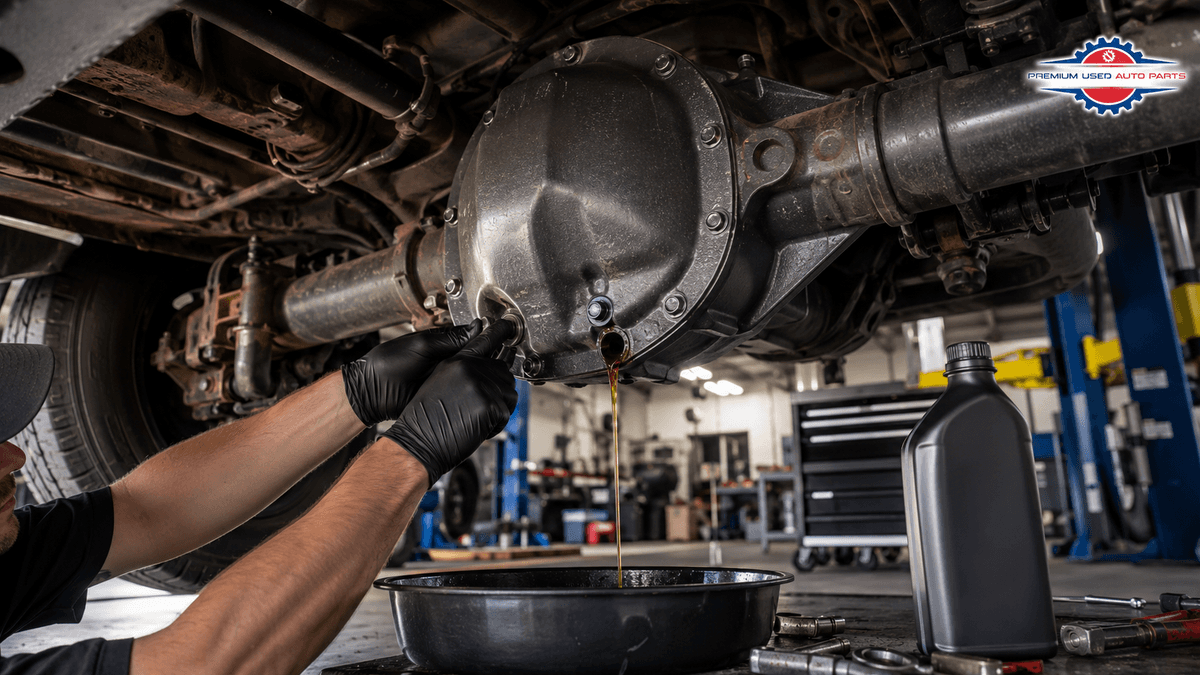
Table of Contents
14 Chapters1. Introduction
2. What Is Rear Differential Fluid?
The purpose of rear differential fluid, a heavy-duty lubricant, is to safeguard the gears, bearings, and other moving components within the rear differential of your car. This specialized fluid is designed to resist the intense pressure generated when power is delivered from the driveshaft to the rear wheels, in contrast to engine oil, which concentrates on cooling and lubricating the engine.
The differential's internal gears continuously mesh under heavy loads when you accelerate, turn, or tow a trailer. These metal parts wear down much more quickly, produce heat, and cause excessive friction if they are not properly lubricated. To keep the differential functioning smoothly for years, manufacturers recommend gear lubricants with increased viscosity and pressure-resistant additives.
This fluid may also be called gear oil or differential oil, depending on the vehicle. The proper specification relies on the drivetrain of your car and the manufacturer's instructions, even though the designations are sometimes used interchangeably.
One of the easiest methods to increase dependability, prolong the life of your drivetrain, and help avoid future expensive differential repairs is to routinely check and replace this lubricant.
3. Where Is Rear Differential Fluid Located?
4. Which Vehicles Use Rear Differential Fluid?
A separate rear differential is commonly found in:
SUVs and automobiles with rear-wheel drive (RWD)
The majority of pickup trucks
Cars with four-wheel drive (4WD)
A lot of cars with all-wheel drive (AWD)
Checking the maintenance schedule in your owner's manual is the simplest approach to find out if your car has a rear differential that has to be serviced on a regular basis. It will indicate the recommended service interval as well as if the differential utilizes its own lubricant.
3. What Does Rear Differential Fluid Do?
Engine oil cannot be used in the differential because of the extreme state differential fluid finds itself in. It leaves a protective anti-corrosive film that decreases friction on vital components like gear, shackles, and shafts. Most differentials have gears splashing the fluid to keep the components lubricated.
Different differential fluid used shows its age by not keeping friction low, which wears gear, and increases the operating temperature. One of the most convenient powertrain maintenance tricks to avoid major repairs is to change the differential fluid.
4. Rear Differential Fluid vs. Differential Oil vs. Gear Oil
Differential oil, gear oil, and rear differential fluid can be confused with each other because the three terms can describe the same lubricant that protects the differential's gears in many cars. The name or label of the fluid isn't important. What's important is following the manufacturer's specifications as they describe the fluid's viscosity and performance rating.
An example of a specification is a rear differential specifying API GL-5 gear oil. This designation is because of the pressures that hypoid gears create. This oil will not be adequate for some other vehicles' rear differentials, especially those with certain types of limited-slip differential gears. That’s why it is best to look at the owner's manual instead of the label on the oil.
| Feature | Rear Differential Fluid | Differential Oil | Gear Oil |
|---|---|---|---|
| Primary use | Lubricates the rear differential | General term for lubricant used in a differential | Lubricates gears in differentials, manual transmissions, and other gearboxes |
| Are they different? | Usually the same product | Often used interchangeably with rear differential fluid | A broader category that includes differential lubricants |
| Common specifications | 75W-90, 75W-140, API GL-5 | 75W-90, 80W-90, API GL-5 | Available in multiple viscosities and API ratings (GL-4, GL-5, etc.) |
| Where it's used | Rear axle differential | Front or rear differential | Differentials, manual transmissions, transfer cases (depending on manufacturer) |
| Important note | Follow the owner's manual | Follow the owner's manual | Not every gear oil is suitable for every differential or transmission |
Key takeaway: Most of the time, rear differential fluid and differential oil are the same lubricant, and gear oil is the general term. It isn’t the brand of the bottle that matters. What’s most important is that you use the exact specification recommended for your vehicle.
5. How Often Should You Change Rear Differential Fluid?
The service interval varies based on several factors, such as the vehicle, the driver, and the driving conditions. Driving on the highway less frequently means less lubrication service, while driving more frequently on the highway means more frequent lubrication service, so always consult your owner's manual first. Many manufacturers recommend servicing the vehicle by changing the lubrication at intervals between 30,000 and 60,000 miles, however, some service intervals on other systems may be more or less frequent.
Driving in more demanding conditions, such as extreme temperatures, off road driving, and towing, means the lubrication system must work under more heat and pressure. Gear wear becomes a bigger risk when the lubricant protective properties are diminished, so service intervals are recommended to be more frequent.
To make it easier, here's a general guideline:
| Driving Condition | Recommended Change Interval |
|---|---|
| Normal daily driving | Every 30,000–60,000 miles |
| Frequent towing or hauling | Every 15,000–30,000 miles |
| Regular off-road driving | Every 15,000–30,000 miles |
| Extreme heat or heavy-duty use | Follow the severe-service schedule in your owner's manual |
Mileage is definitely important, but you should always be on the lookout for leaks, strange noises, bad fluid, or burning smells. All of those are good reasons to have the differential checked out, even if you haven't met the mileage interval.
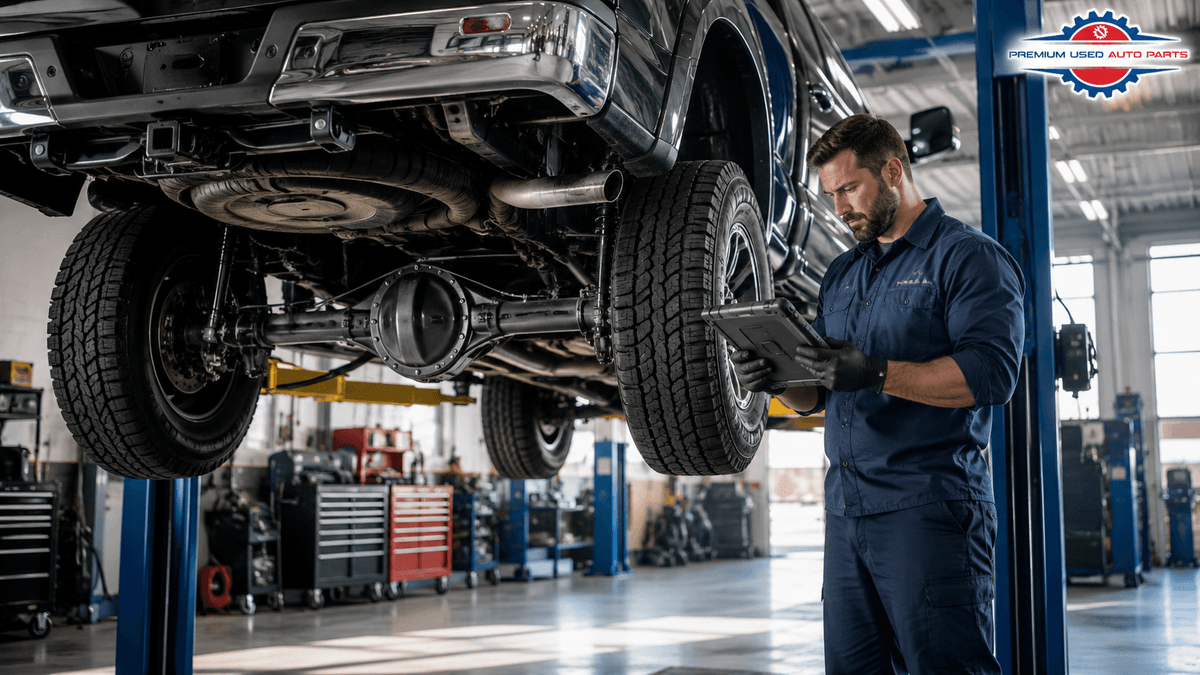
Make it a habit to have the differential checked out every time your car is in the shop for a major service. Fluid can easily get replaced, but damaged fluid will deteriorate gears and bearings, and those are a lot more costly to fix.
When you have the differential serviced regularly, it has a positive impact on the entire driveline system of the vehicle. It helps everything run better, in a better condition, and it will also improve the lifespan of the differential.
6. What Happens If You Don't Change Rear Differential Fluid?
Neglecting your vehicle’s differential fluid will accumulate damage over time. As differential fluid ages, it loses protective properties and mechanical barriers in differential lubricants wear thin. Consequently, metal components will come into contact with each other and will begin to wear, though this will happen slowly at first.
Though it can be easy to neglect maintenance, it will first be noticeable by unpleasant mechanical sounds. You might hear whining or grinding from the rear of the vehicle, especially during acceleration or turning.
Even though the sounds may be alarming, heat elevated by friction caused by inadequate lubrication will damage the components of the differential. If the differential is neglected for even longer, the components will wear to the point that they will begin to break apart and fall into the differential.
At this point, maintenance will be horrendously expensive, and interval maintenance will be in the hundreds, if not thousands. The differential is an essential mechanical component of your vehicle, and the good news is that this failure is 99% avoidable.
7. Can You Drive With Low or Dirty Rear Differential Fluid?
The short answer is yes. The long answer is that you definitely shouldn't. Your vehicle may be able to keep on driving for a while, but every mile that you drive with low or dirty differential fluid, the friction inside the gears is going to continue to get worse. The risk for your differential's gears failing is going to increase.
Early on, the only thing you may notice are very faint noises that sound like whining and vibrations when you accelerate or turn. Because symptoms build over time, they are very easy to overlook. Unfortunately, once you hear distinguishable noises of gear grinding or feel noticeable vibrations, the gears and bearing of the differential have more than likely sustained some form of damage that is beyond repair.
If you are in a situation where the fluid is low because it's leaking, or you smell burning, hear grinding, and see gear oil around the housing of the differential, it is best to not drive the vehicle until the problems are fixed. Driving the vehicle in this state may further damage the gears, and what could have only been a fluid change is now a repair that costs a lot more.
8. What Is the Average Rear Differential Fluid Change Cost in the USA?
The cost of changing out rear differential fluid is inexpensive when considering the costs of differential repair and replacement. Most American drivers can expect differential changes to run between $100 and $200. This is likely to be more if you have a front differential.
Here's a basic outline of the costs associated with purchasing:
| Service Option | Typical Cost (USD) |
|---|---|
| DIY | $30–$80 |
| Independent Repair Shop | $100–$200 |
| Dealership | $150–$300+ |
The price could vary for a number of reasons. The type and model of your vehicle may dictate the cost of gear oil. You may also have to pay more for labor, and there may be a need for a special additive (which may or may not be required). The cases of luxury vehicles, heavy-duty trucks, and some AWD vehicles may have a need for a special lubricant or more fluid, which may require a greater cost.
You may be tempted to skip this service, and while this may cost less in the short term, it will be much more expensive in the long term. Worn gears and a failed differential may cost a couple thousand dollars or more to repair. The most cost effective way to protect your drivetrain and avoid these expensive repair bills is to do routine fluid changes on a regular basis.
9. How to Choose the Right Rear Differential Fluid
Buying gear oil is not simply about spending big bucks. It's about using the gear oil designed for your vehicle. The owner's manual is a great starting point for gear oil as it explains viscosity, gear oil specifications, and differential requirements. The wrong differential fluid will lead to a lack of coverage and, at worst, premature failure of the gears.
The modern vehicle will most likely require API GL-5 gear oil. This oil is made to deal with the pressures of a differential, however, viscosity is not a personal choice and will vary based on the vehicle, the weather, and the driving conditions. The common viscosities that come up when shopping are 75W-90, 75W-140, and 80W-90.
Differentials that are limited-slip may ask for a gear oil with a friction modifier. Regular gear oil leads to a poor performing differential and wear of the internal components. That’s why it is crucial to read what the manufacturer says.
You can also choose between synthetic gear oil and the standard type. Although you may find the standard type of gear oil works fine for your vehicle, synthetic gear oils are more resilient to the factors of heat and oxidation and are a favorite for vehicles that tow and drive off-road, as it stands up to the stress of those activities.
10. Can You Change Rear Differential Fluids Yourself?
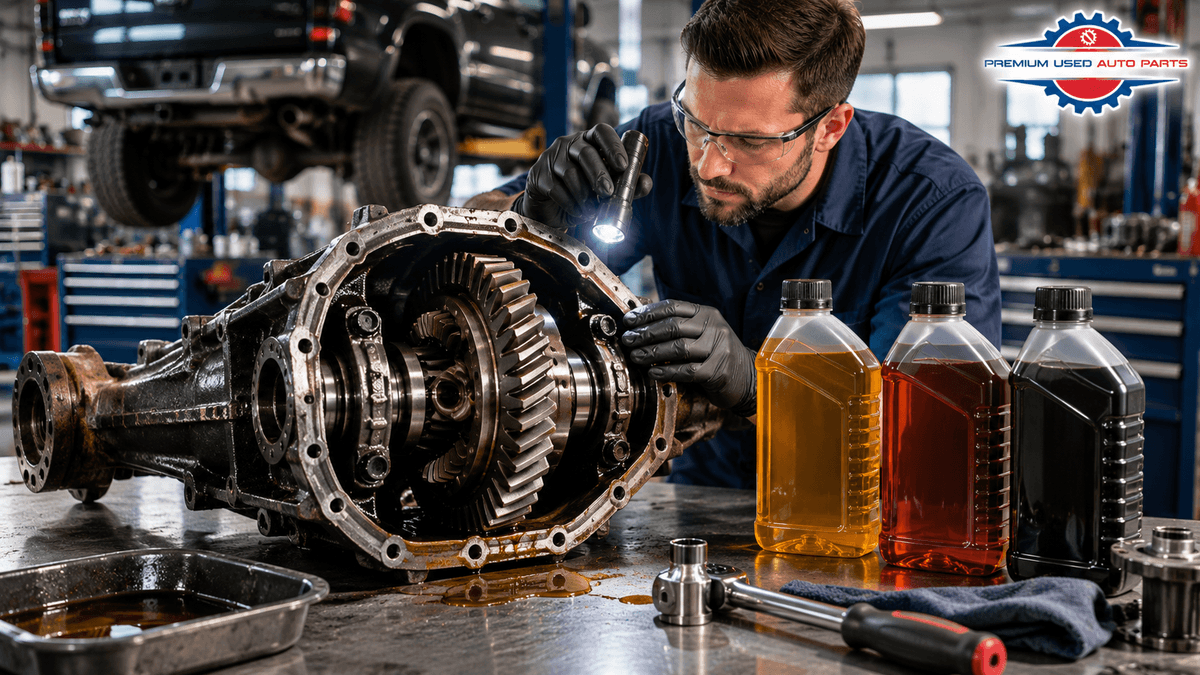
Yes, you can, and many do, change rear differential fluid at home if you have the right tools, some mechanical experience and can easily access the differential on your vehicle. For many rear-wheel drive trucks and SUVs, this is considered easy maintenance.
However, some vehicles use more complex differential designs and would require special procedures or tools to work on, making it more practical to have it serviced professionally.
At a minimum to change rear differential fluid you would need:
- The correct gear oil
- A drain pan
- Some basic tools
- A fluid pump (if the differential has no drain plug)
- Safety gloves and jack stands or a lift
The job usually consists of draining the fluid, (the drain and fill plugs may be cleaned and inspected for debris) and filled with the correct differential lubricating oil. This may be a good time to check for seal leaks.
If you need to pump fluid for a differential with no plug or have an air gap for the fill level plug, it is probably best to have a professional do it for you. This can prevent premature and expensive repairs, while a properly serviced differential can last many years of vehicle operation.
11. Conclusion
One of the best ways to protect your vehicle's drive train while avoiding costly repairs is keeping your rear differential fluid topped off with the recommended frequency. Fresh fluid lubricates the gears, lowers friction, and helps to avoid premature differential failure due to wear and overheating. The cost of preventative maintenance now is always much less than the cost of repairs later.
If your differential is already damaged beyond a simple fluid change, the most reasonable option may be replacing the assembly with a quality OEM part. Premium Used Auto Parts sells tested, quality OEM rear differentials that are matched to your VIN for perfect fitment, and are shipped all over the United States.
We can help you find the right part for your vehicle with confidence and speed whether you are replacing a worn differential or any other drivetrain component.
12. FAQs

The Premium Used Auto Parts Editorial Team is backed by years of experience in the automotive parts industry and creates practical, research-driven content for vehicle owners, repair shops, and DIY enthusiasts across the USA. Our team combines real-world parts expertise with industry research to help drivers make informed decisions about OEM replacement parts, vehicle repairs, and maintenance. Every article is developed with a commitment to accuracy, transparency, and delivering reliable information that supports smarter vehicle ownership.